
The Economics of Irish Boxing Changed the Night Croke Park Sold Out
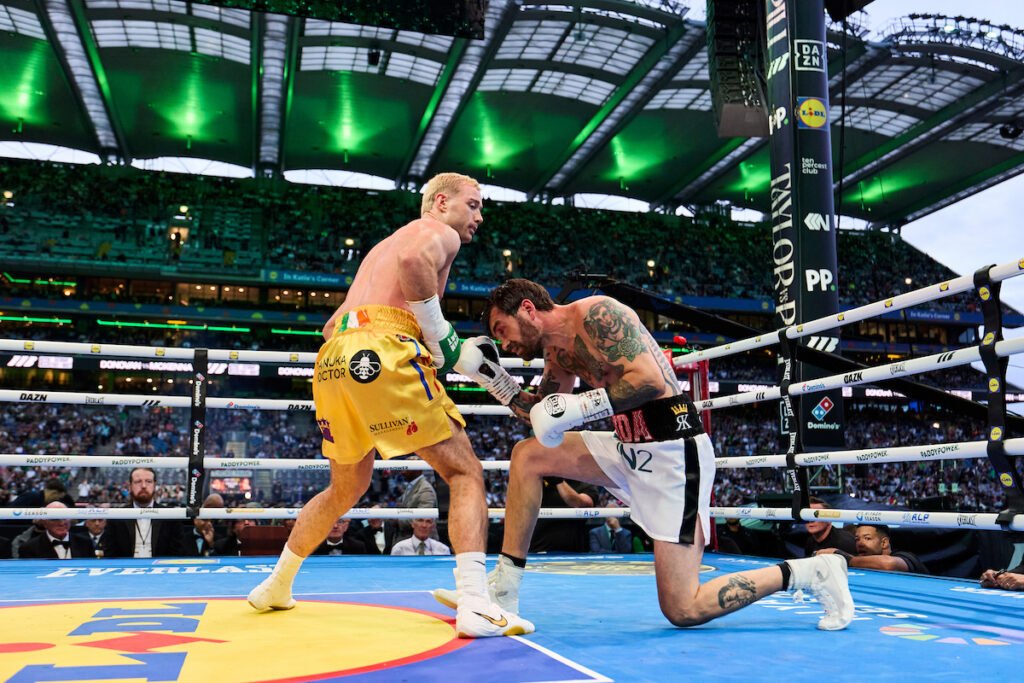
Irish boxing has always had a great sporting brand and Croke Park proved it can do business on a completely different level. The importance of Katie Taylor last night was not just about one fighter, one night; it filled the biggest stadium in Ireland. It showed that boxing in Ireland can be a major live entertainment product that can generate revenue across ticketing, broadcasting, sponsorship, hospitality, and tourism.
The estimated crowd of 80,000 was particularly significant, as it was the first time in over 50 years that stadium boxing was not a feature at Croke Park. It was a sporting and commercial milestone, as the venue had not hosted a boxing event of that magnitude since Muhammad Ali took on Al “Blue” Lewis in 1972.
Why Did Croke Park Change the Revenue Equation?
The stadium game is different because the ticket sales inventory is so huge. A show in an arena at the 3Arena could accommodate between 10,000 and 13,000 spectators, while Croke Park could host 80,000 for a big attraction.
That gap brings out various new income levels. But the value of general admission, premium seating, hospitality packages, corporate boxes, and sponsorship inventory all increases when attendance is many times greater — and the promoters’ bargaining power with broadcasters and commercial partners also increases.
The impact goes beyond ticket revenue. A sold-out stadium can bring merchandise sales, media and sponsor exposure to well beyond what a typical fight night can provide, and can provide a “national event” feel.
Why Does Broadcasting Matter More at Stadium Scale?
It was a commercially important decision to make Taylor’s last available on RTÉ and internationally on DAZN. The fight was broadcast free-to-air to give it mainstream national exposure, but it was also streamed worldwide to monetize a global audience.
Also, that would be a hybrid model and it might be a route that would become more appealing for Irish boxing. A domestic broadcaster can build familiarity and national interest, and a global streaming platform can give promoters access to viewers who may already follow Irish fighters overseas.
That’s also important for sponsors. The fact that a brand is linked to an event watched in an 80,000-seat stadium, as well as in multiple international markets, is seen to get much more exposure than a brand linked to a smaller domestic card.
Can Irish Boxing Turn One-Off Events Into a Sustainable Market?
The difficulty is making a landmark night into a repeatable economic model. Katie Taylor was a special commercial draw, as she had Olympic medals, world championships (undisputed), and national acclaim – few fighters had all three combined.
But Irish boxing cannot take for granted that all big fights will fill out Croke Park. What’s more realistic is to use the event as evidence that the ceiling is higher than was believed, and to erect a stronger ladder of home shows below it.
Part of that structure will include commercial partnerships. But Irish sports fans are no strangers to a broader entertainment economy that encompasses sponsorship, streaming, and other digital products like online roulette in Ireland, and boxing promoters are now competing for a larger market for leisure spending and brand attention.
The trick is to create boxing shows that are entertaining enough to warrant a high price and aren’t solely dependent on a single star.
What Does This Mean for Dublin as a Boxing Market?
Dublin’s commercial hierarchy is now more clearly defined. Smaller venues can be used for prospecting, the 3Arena can accommodate big domestic and international cards, while Croke Park can be the occasional venue for the really big cards.
That gives promoters more flexibility in developing fighters. A prospect doesn’t have to make the leap from a small hall to a stadium; they can grow progressively by taking on progressively larger stages as they build ticket-selling and broadcast recognition.
The 3Arena is particularly significant as it offers a realistic middle ground. If there is a consistently strong five-figure attendance there, then it is a better market when Croke Park is not in operation.
Could Irish Boxing Become More Valuable to Sponsors?
The sell-out at Croke Park also altered how sponsors view the sport. Boxing had already provided strong emotional engagement, but the Taylor event was meant to demonstrate that it could reach a mass audience comparable to that of big football or rugby events.
Commercial partners: it brings opportunities in shirt branding, ring sponsorship, digital content, fan activations and hospitality. When there is a clear progression from smaller events to nationally significant nights, sponsors are more likely to invest.
The same goes for the broadcasters and streaming services. Media rights are more valuable if Irish boxing can consistently host events with compelling stories to tell domestically, because there is a larger audience to monetize.
What Happens After Katie Taylor?
Irish boxing will now see how much of the commercial momentum she created in the post-Taylor era will be maintained. There’s no one likely to replace her right away, but there are more candidates who can make the market stronger.
The real economic legacy of Croke Park, however, is not that one event sold 80,000 tickets. That now promoters, broadcasters and sponsors have proof that Irish boxing can be done at stadium level with the right fighter, story and event.
That alters the future negotiations and investment decisions. Whether Irish boxing requires another Croke Park event every year is debatable, but that one was possible at all has lifted the commercial cap on the sport.

