
From Barry McGuigan to Katie Taylor: The Irish Boxers Who Defined Their Eras
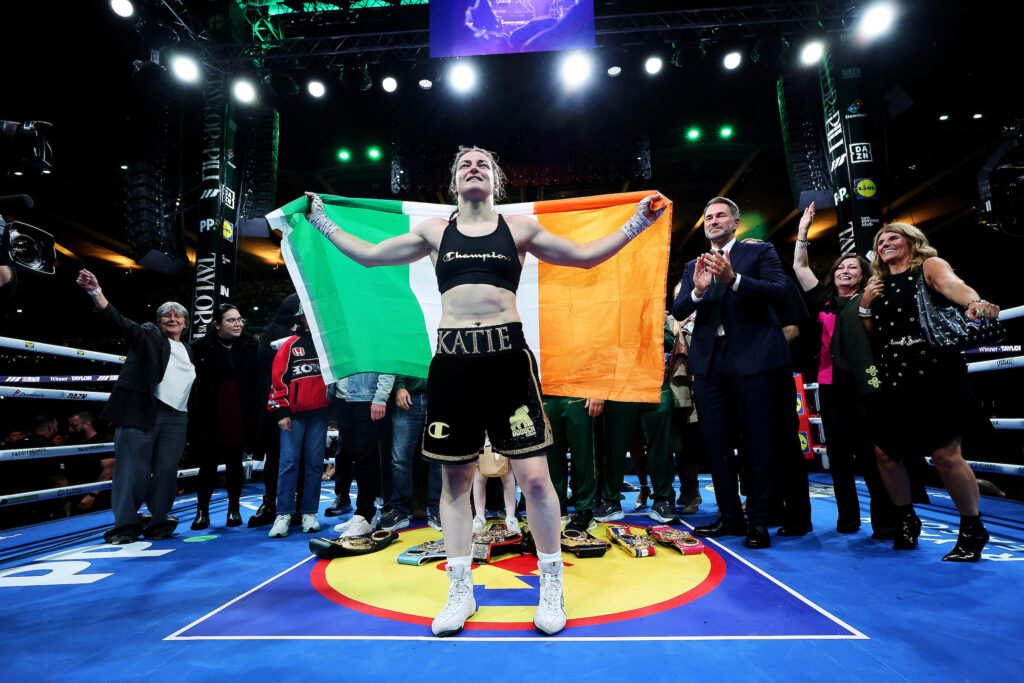
The search for the greatest Irish boxers begins with a problem. Barry McGuigan’s importance cannot be reduced to his professional record, while Kellie Harrington’s amateur achievements cannot be measured against Steve Collins’s championship bouts as though they belonged to the same competition. The number of sanctioning bodies and available titles has also changed across eras.
Using verified results, championship level, defining victories, success across weight divisions and wider influence as the main criteria, Katie Taylor has the strongest all-round claim among the six fighters considered here. McGuigan may have the most resonant single championship victory; Collins built an imposing run against celebrated opponents; Carl Frampton won world titles in two divisions; Andy Lee completed an unlikely climb to the middleweight summit; and Harrington represents the strength of Ireland’s amateur system. Each reached prominence by a different route.
Betting markets can offer another way to read a fight, as changing odds reflect expectations around form, style match-ups and possible outcomes. They should not be treated as proof that one boxer will win: reach, pace, defensive habits, weight changes and the quality of previous opposition still require separate analysis. Irish readers can find further betting-related information at ice-casino.info/ie/. Odds can change quickly, however, and gambling always carries financial risk, so it should be limited to adults using money they can afford to lose.
How can Irish boxers from different eras be compared?
A simple count of wins or titles would distort the picture. A boxer from the modern four-belt era has access to opportunities that did not exist in precisely the same form for earlier generations. Amateur competition presents another difficulty: Olympic success is decided through a tournament, while a professional champion builds a record through individually negotiated contests over several years.
Geography also requires clarity. This comparison follows an all-island understanding of Irish boxing, including fighters from the Republic of Ireland and Northern Ireland. That is why Belfast’s Carl Frampton stands alongside Dublin’s Steve Collins, Limerick-associated Andy Lee and Bray’s Katie Taylor. American-born fighters who merely claim Irish ancestry are outside the scope.
Five criteria provide a more useful comparison:
- Peak achievement: the highest recognised level reached in amateur or professional boxing.
- Defining opposition: the quality and reputation of the opponents beaten at a fighter’s peak.
- Range: success in more than one division or in both amateur and professional competition.
- Response to adversity: what happened after a defeat, knockdown or failed title attempt.
- Historical influence: whether the career changed how Irish boxing, or a part of the sport, was perceived.
These criteria do not produce a mathematically objective ranking. They reveal what kind of claim each fighter possesses. A dramatic championship peak, sustained dominance and cultural importance are related, but they are not interchangeable.
Six fighters with different claims to greatness
Katie Taylor’s professional record stood at 25–1 following her third victory over Amanda Serrano in July 2025. A later contest listed without a precise date falls outside the verified period used in this comparison and is therefore not included.
Kellie Harrington’s displayed 14–1 record should not be treated as a complete account of her amateur career. Amateur records are often incomplete because databases may not capture every bout from national and international tournaments.
| Boxer | Primary arena | Verified record or status | Defining achievement | Strongest claim |
| Barry McGuigan | Professional | 32–3, 28 KOs | Defeated Eusebio Pedroza in June 1985 | A championship victory with exceptional public resonance |
| Steve Collins | Professional | 36–3, 21 KOs | World titles at middleweight and super-middleweight | Consecutive-era wins over Chris Eubank and Nigel Benn |
| Carl Frampton | Professional | 28–3, 16 KOs | World championship success in two divisions | Elite victories at super-bantamweight and featherweight |
| Andy Lee | Professional | 35–3–1, 24 KOs | Won the vacant WBO middleweight title in December 2014 | Late-career breakthrough powered by fight-changing punching |
| Katie Taylor | Amateur and professional | 25–1 through July 2025 | Olympic gold followed by championship success in two professional divisions | The broadest combination of amateur and professional achievement |
| Kellie Harrington | Amateur | Tapology displays 14–1, but the record is incomplete | Victory over Wenlu Yang on 6 August 2024 | Evidence of Ireland’s continuing strength in elite amateur boxing |
McGuigan’s knockout percentage is conspicuous: 28 of his 32 wins ended inside the distance. Lee also carried substantial power, recording 24 stoppages in 35 victories. Taylor’s six stoppages through July 2025 tell a different story. Her case depends on championship results and sustained success rather than a high knockout ratio.
Such differences explain why records need context. A boxer’s greatness may rest on pressure and power, technical consistency, adaptability between divisions or success within the distinctive demands of amateur competition.
The nights that shaped their reputations
The most revealing way to understand these careers is through their turning points. Their peaks were often followed closely by setbacks, while several defining victories came only after earlier disappointment.
- June 1985 – McGuigan defeats Eusebio Pedroza: McGuigan beat the established WBA featherweight champion at Loftus Road in London. The supplied BoxRec page records an attendance of 26,000. This was the performance that elevated him from contender to world champion and public figure.
- June 1986 – Steve Cruz defeats McGuigan: One year later in Las Vegas, McGuigan lost the title over 15 rounds. BoxRec records that he was penalised for low blows in the 12th and knocked down twice in the 15th. The contrast with the Pedroza victory illustrates how brief a championship peak can be.
- 1995–1996 – Collins masters a celebrated sequence: Collins defeated Chris Eubank twice in 1995 and Nigel Benn twice in 1996. Those four results gave his super-middleweight reign an identity built around recognisable, high-level opposition.
- December 2014 – Lee stops Matvey Korobov: Lee won the vacant WBO middleweight championship in Las Vegas. The result completed his recovery from earlier defeats and turned a career known for dangerous punching into that of a world title-holder.
- July 2016 – Frampton beats Leo Santa Cruz: Frampton won in Brooklyn and added featherweight success to his achievements at super-bantamweight. Santa Cruz reversed the result in January 2017, creating a rivalry that captures both Frampton’s peak and its limits.
- May and November 2023 – Taylor loses, then answers Cameron: Chantelle Cameron defeated Taylor in Dublin in May. Taylor won their return bout at the same venue six months later, converting her first professional loss into one of her clearest demonstrations of resilience.
- 6 August 2024 – Harrington defeats Wenlu Yang: Tapology records a majority-decision victory in Olympic competition. The supplied source supports the result, although it does not provide a sufficiently complete career history for broader statistical claims.
These episodes show why undefeated records are not the only measure of excellence. McGuigan, Frampton and Taylor all suffered significant defeats. What distinguishes their careers is that the losses occurred while pursuing elite opposition or greater challenges, not while protecting an artificial record.
McGuigan, Collins, Frampton and Lee: four professional routes
Barry McGuigan’s career is remembered above all for one ascent. He entered the Pedroza fight with the energy of a pressure fighter and left as a featherweight champion. His 32–3 record was excellent, but the larger significance of that night explains why he retains a place in conversations that include boxers with broader championship résumés. Presents him as a unifying figure during a period of sectarian conflict. That is a historical interpretation rather than a result listed in a database, but it explains why his reputation extends beyond wins and losses.
Steve Collins presents a different case. His three professional defeats came before the series that defined him. He eventually secured world titles at middleweight and super-middleweight, then established his authority through repeated victories over Eubank and Benn. BoxRec lists two wins against each man. This matters because the supplied Boxing Insider article mentions only one victory over Benn, an inconsistency resolved here in favour of the bout database.
Carl Frampton’s strongest argument is range. After championship success at super-bantamweight, his July 2016 victory over Santa Cruz demonstrated that his timing and counter-punching could work against elite featherweight opposition. He lost the immediate rematch and later failed against Jamel Herring in a 2021 attempt to win a super-featherweight title. Those defeats prevent a claim of uninterrupted dominance, but they also show the ambition behind his two-division résumé.
Andy Lee’s path was less orderly. His southpaw power allowed him to alter fights suddenly, even when the preceding rounds had been difficult. He defeated Korobov for the vacant WBO middleweight title in 2014, drew with Peter Quillin in a 2015 non-title contest after Quillin missed weight, and then lost the belt to Billy Joe Saunders. Lee was not the longest-reigning champion in this group, but reaching the summit after earlier setbacks gives his career lasting narrative force.
How Taylor and Harrington widened the story
Katie Taylor’s claim does not rest on one part of her career. According to the supplied Boxing Insider account, she won Olympic gold at London 2012, the first Games to include women’s boxing. She then entered the professional ranks in 2016 and built championship success at lightweight before moving up to super-lightweight.
The sequence against Cameron is central to her legacy. Taylor’s defeat in May 2023 was her first as a professional. Rather than returning against lesser opposition, she accepted an immediate rematch and won in November. Her contests with Amanda Serrano provide another measure of longevity: BoxRec records Taylor victories over Serrano in 2022, 2024 and July 2025. Through that third meeting, Taylor’s professional record stood at 25–1.
Her strongest case, therefore, is breadth. McGuigan’s Pedroza victory may have greater value as a single communal memory, and Collins’s sequence against Eubank and Benn may be the more concentrated run against famous rivals. Taylor, however, combines an Olympic summit, professional championship achievement in two divisions, repeated elite-level contests and a successful response to her only confirmed professional defeat.
Kellie Harrington’s place among Ireland’s leading fighters is built on elite amateur competition rather than a professional title record. Her majority-decision victory over Wenlu Yang on 6 August 2024 provides a clear example of her success at the highest tournament level. Because the available record does not cover every bout in her amateur career, her standing is better judged by the significance of such results than by the incomplete win-loss total alone.
Who has the strongest overall case?
Katie Taylor emerges as the most convincing all-round choice among these six famous Irish boxers. That conclusion follows from the range of her verified achievements rather than from popularity alone: she reached the Olympic summit, won major professional honours across two divisions, faced leading opposition and recovered directly from defeat.
The answer changes when the criterion changes. Barry McGuigan has a powerful claim as the most culturally resonant champion of his era. Steve Collins owns the strongest concentrated sequence against Eubank and Benn. Carl Frampton’s two-division success, Andy Lee’s middleweight breakthrough and Kellie Harrington’s amateur contribution illustrate why Ireland’s boxing history cannot be represented by one record or one championship belt. Taylor offers the broadest résumé; the others explain the depth of the tradition.